Perusahaan ini terdaftar sebagai Free Member. Hindari melakukan pembayaran sebelum bertemu penjual atau melihat barang secara langsung. COD (Cash On Delivery) atau bertemu langsung dengan penjual merupakan metode transaksi aman yang kami sarankan.
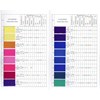
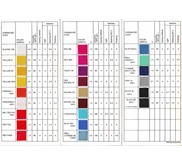
Basic dyes are renown for their brilliancy of hues and strong tinctorial strength and cover a wide range of colours which is beyong compare with any ither class of dyestuff. Due to their high concentration, it is possible to obtain attractive shades and relatively deep colours while employing only a small amount of the dyestuff.
Basic dyes are frequently employed for the topping of goods dyed with direct or sulphur dyes in order to obtain brighter results in shade and at the same time, to improve the washing fastness of the dyed goods.
Basic dyes can be dyed and printed onto all kinds of natural fibres and can also be directly applied to animal fibres, such as wool and silk. A certain number of basic dyes may also be empliyed for the dyeing and printing of acetate rayon and polyacrylic fibres, on which comparatively better fastness properties are obtained.
Apart from being employed for the dyeing of textile fabrics, basic dyes are also extensively applied in other industries such as for the colouring and dyeing of wodd, paper, leather, straw, feathers, straw-braided art goods, etc. Free bases of basic dyes can be used as solvent dyes. Toners and Colour-Lakes prepared from basic dyes possess very good fastness to light and are therefore widely employed in the preparation of carbon paper, ball-pen and stamp-pad inks, copying pencils, typewriter ribbons, printing inks and other stationaries as well as cosmetics. Furthermore, basic dyes when precipitated on china clay, may be used as colouring ingredients in distempers.
- Preparation of Dye Solution -
Basic dyestuffs are cationic in character and should not be mixed with anionic surface active agents or anionic dyestuffs. As basic dyetuffs are less soluble in water, acetic acid or alcohol is often recommended to facilitate solution. They are best dissolved by pasting up with little diluted acetic acid (30%) and followed bu dilution with hot water under constant stiring. If necessary, the solution may be heated slightly to complete the solution, but boiling should be avoided in order to prevent decomposition of the dyestuff, causing formation of tarry matters. Particularly with Auramine O conc., the dissolving temperature should not exceed 60 degree celcius, or decomposition of the dye may occur, causing lower colour yield. The dyestuff solution should be strained befour use.
- Water for Dyeing and Printing -
For dyeing with basic dyestuff, soft water is generally used. If soft water is not available, more acetic acid should be added to the dye liquor so as to correct water hardness and to prevent faulty dyeings. Besides calcium and magnesium ions, hard water sometimes also contains iron ions. which combine with tannic acid during mordanting and consequently the dyeings become dull.
Packaging: metal drum
Net Weight: 25 kg
Please call for more information